According to the Vietnam Association of Seafood Exporters and Producers (VASEP), Vietnam’s lobster exports reached approximately USD 585 million in the first six months of 2026, up 44.3% year on year. This performance highlights the strong growth of a high-value seafood category, driven by increasing international demand for live seafood.
In response to this demand, KLC Seafood continues to strengthen its supply capabilities and diversify its product portfolio. Ornate spiny lobster and scalloped spiny lobster are two of the company’s core live seafood products, serving different market segments and requirements.
Ornate Spiny Lobster: A Premium Seafood Product
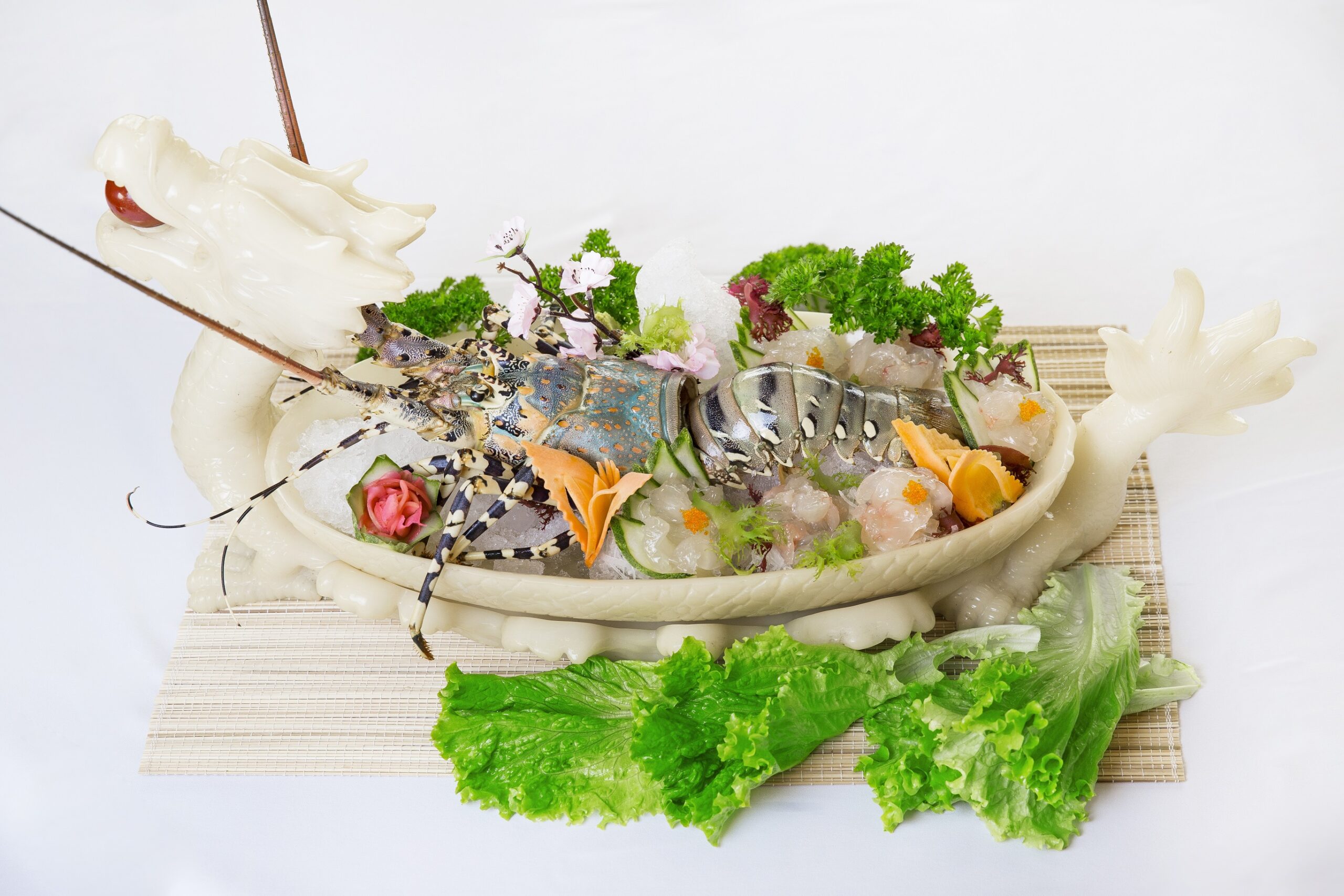
Ornate spiny lobster is a high-value seafood product distinguished by its striking appearance and large size. It can be readily identified by its distinctive blue-green shell, light-coloured spots across the body, and alternating bands of colour along the legs and antennae.
Size is one of the product’s defining qualities. At KLC Seafood, ornate spiny lobsters weigh approximately 750 grams each on average. This size makes them particularly suitable for orders serving restaurants, hotels, banquets and markets with demand for premium live seafood.
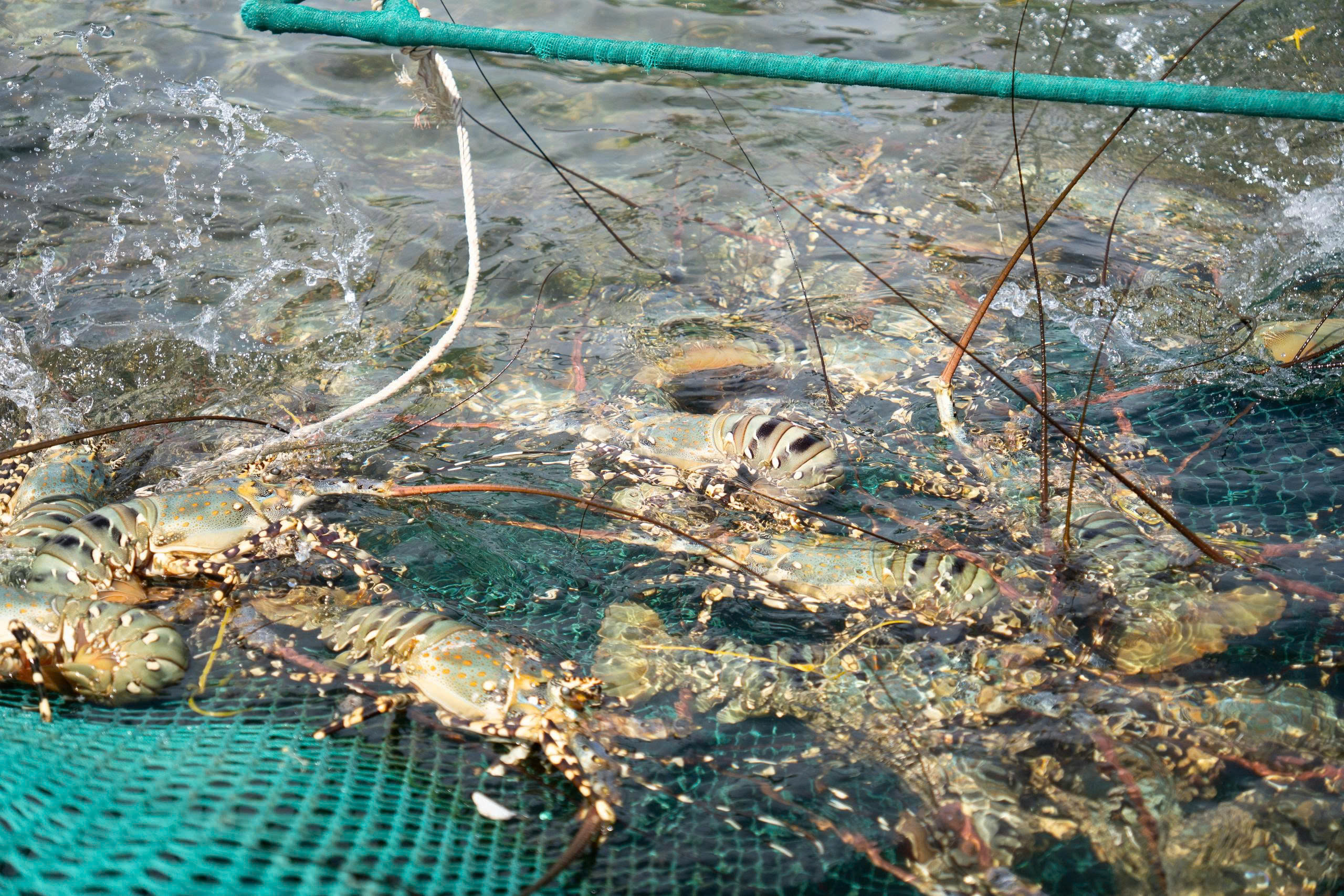
In addition to their distinctive appearance, ornate spiny lobsters are valued for their firm texture and natural sweetness. Before being added to the company’s supply inventory, each lobster is carefully assessed for physical condition, size and overall integrity according to the specifications of the order.
Scalloped Spiny Lobster: Broad Market Demand and Flexible Specifications
While ornate spiny lobster is positioned in the premium segment, scalloped spiny lobster offers the advantages of a more moderate size, flexible specifications and broad market appeal.
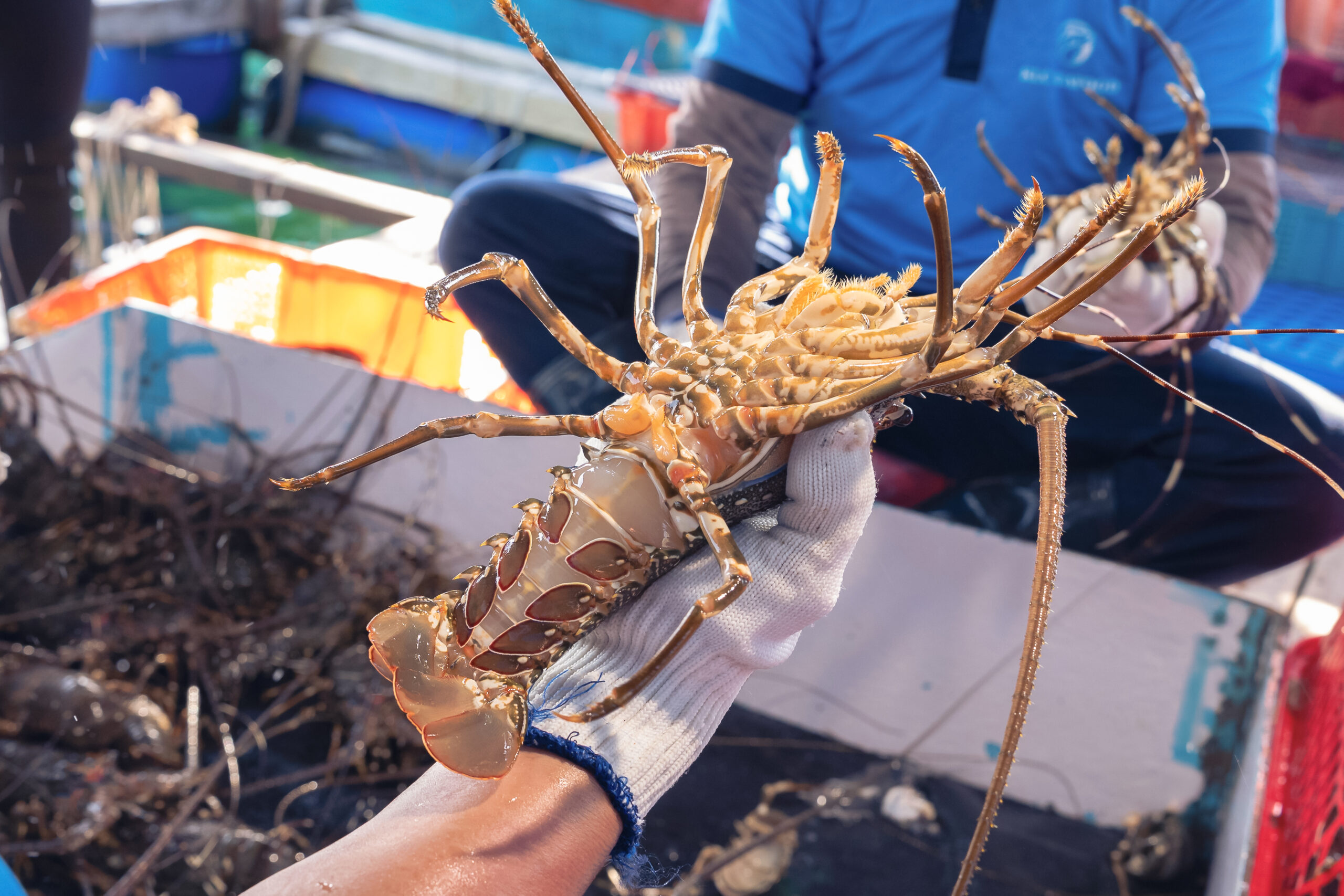
The product has a dark green shell, a compact body and distinctive patterns along its legs. At KLC Seafood, scalloped spiny lobsters weigh approximately 300 grams each on average, equivalent to around three lobsters per kilogram.
According to VASEP, scalloped spiny lobster is currently the primary growth driver of Vietnam’s lobster exports. In 2025, exports of this product reached approximately USD 843 million, accounting for 98.3% of the category’s total export value.
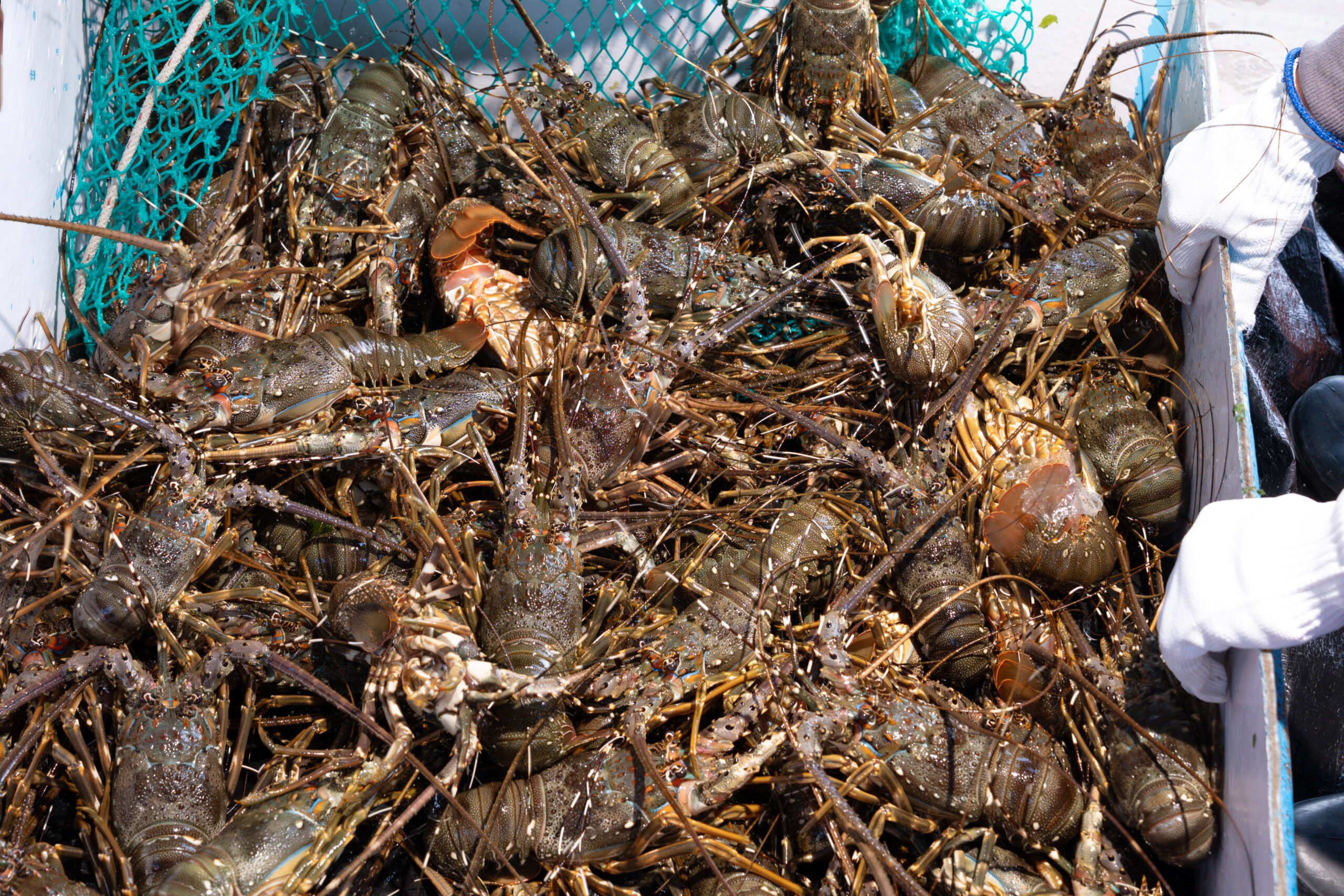
These results reflect strong market demand for scalloped spiny lobster and demonstrate its ability to meet a wide range of product specifications and consumer segments.
At KLC Seafood, scalloped spiny lobsters are graded according to size, physical condition and batch consistency. This enables the company to prepare supplies that meet the requirements of individual customers and destination markets.
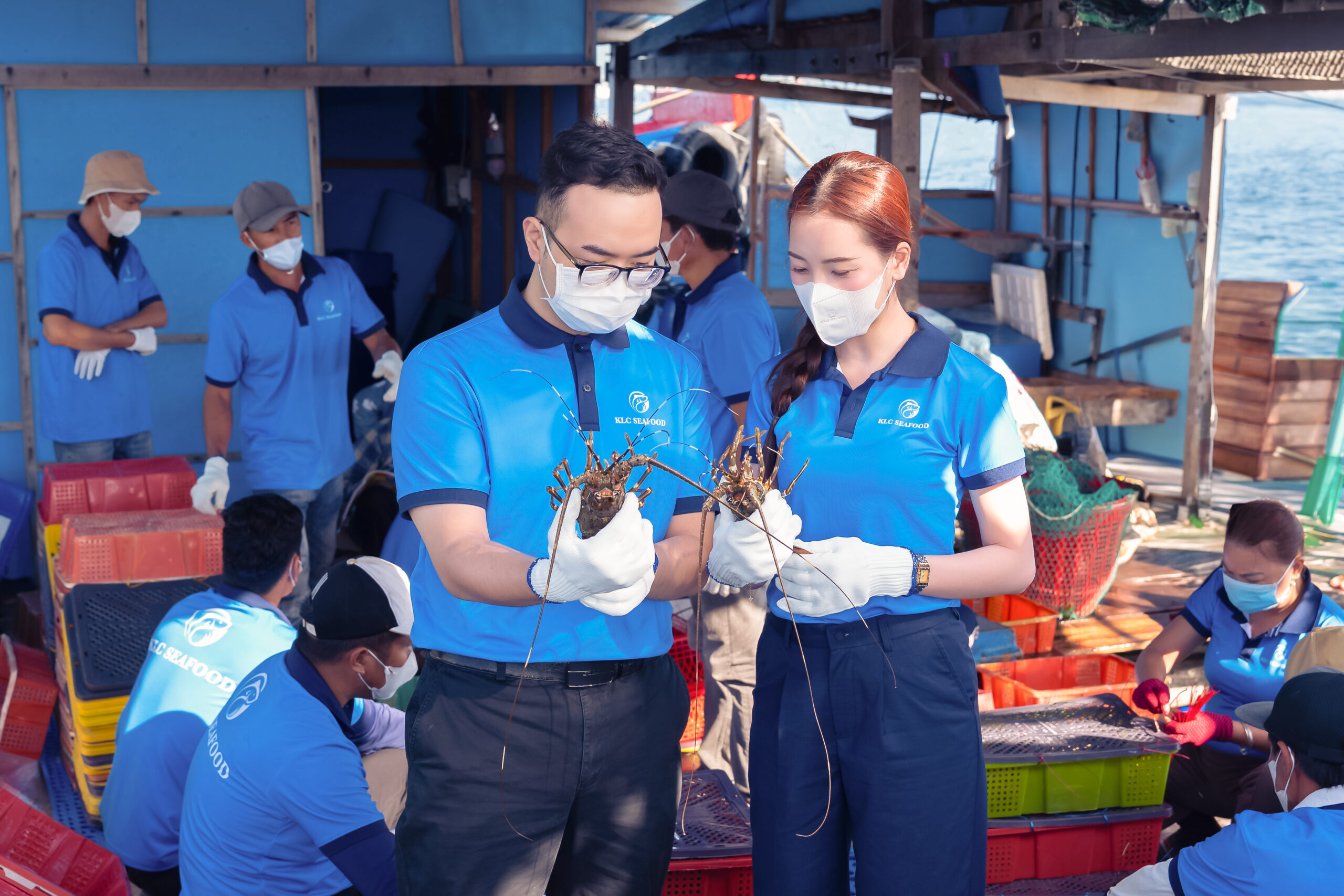
Key Differences Between Ornate and Scalloped Spiny Lobsters
Both products belong to the high-value live seafood category, but each offers distinct commercial advantages.
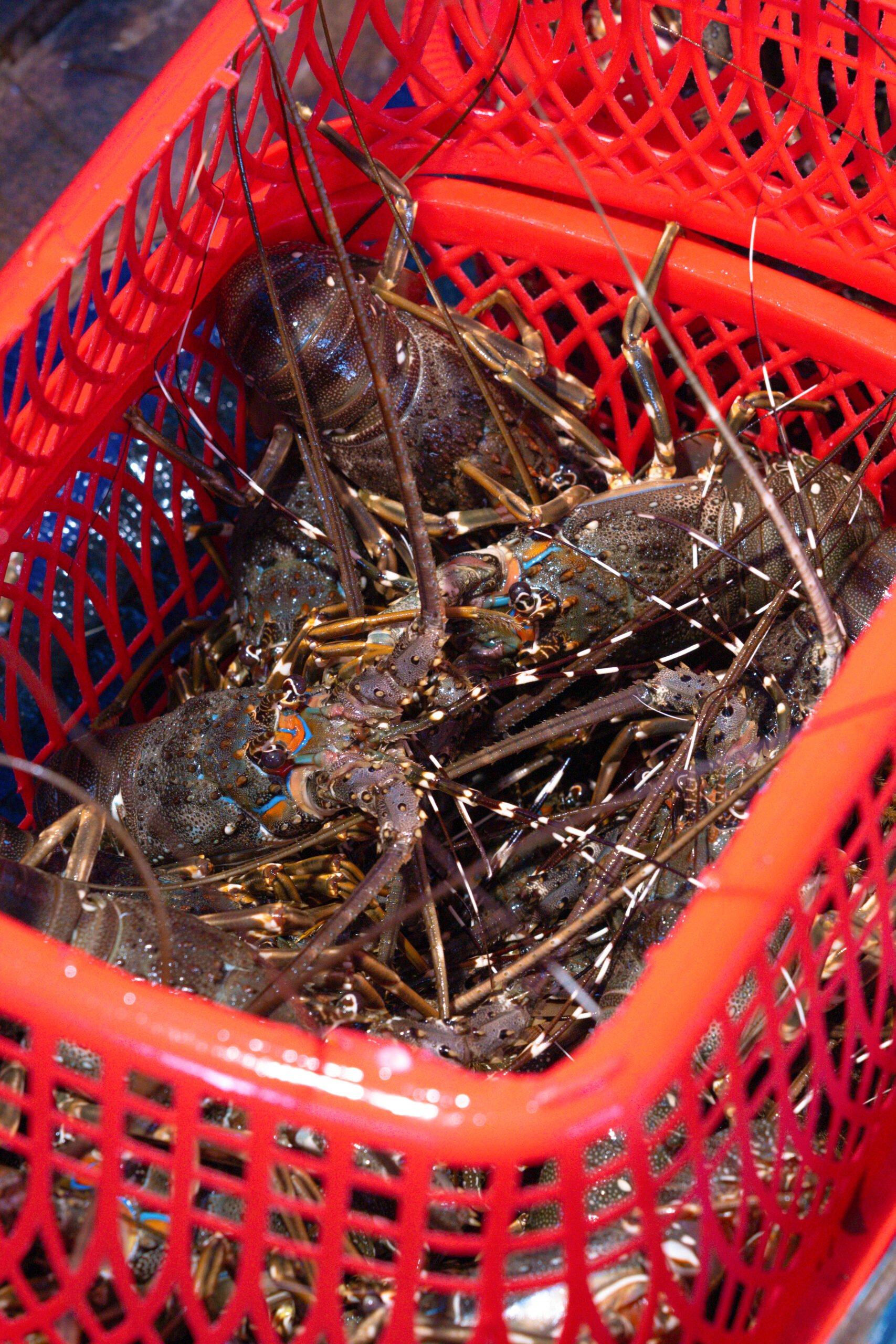
| Criterion | Ornate spiny lobster | Scalloped spiny lobster |
| Appearance | Striking colours, light-coloured spots and distinctive banding | Dark green shell and compact body |
| Size | Generally larger | Moderate size with flexible specifications |
| Positioning | Premium product segment | Broad market demand |
| Customer segments | Restaurants, hotels and orders requiring large live seafood | Restaurants, distribution networks and a broad range of customers |
| Selection criteria | Physical condition, integrity and appearance | Size, physical condition and batch consistency |
These differences are not intended to determine which product is more valuable. Rather, they demonstrate how the two product lines address different market needs.

Ornate spiny lobster strengthens KLC Seafood’s premium product offering, while scalloped spiny lobster broadens market reach through flexible specifications and widespread demand. Developing both product lines enables KLC Seafood to build a more responsive portfolio and organise supply according to the requirements of each order.
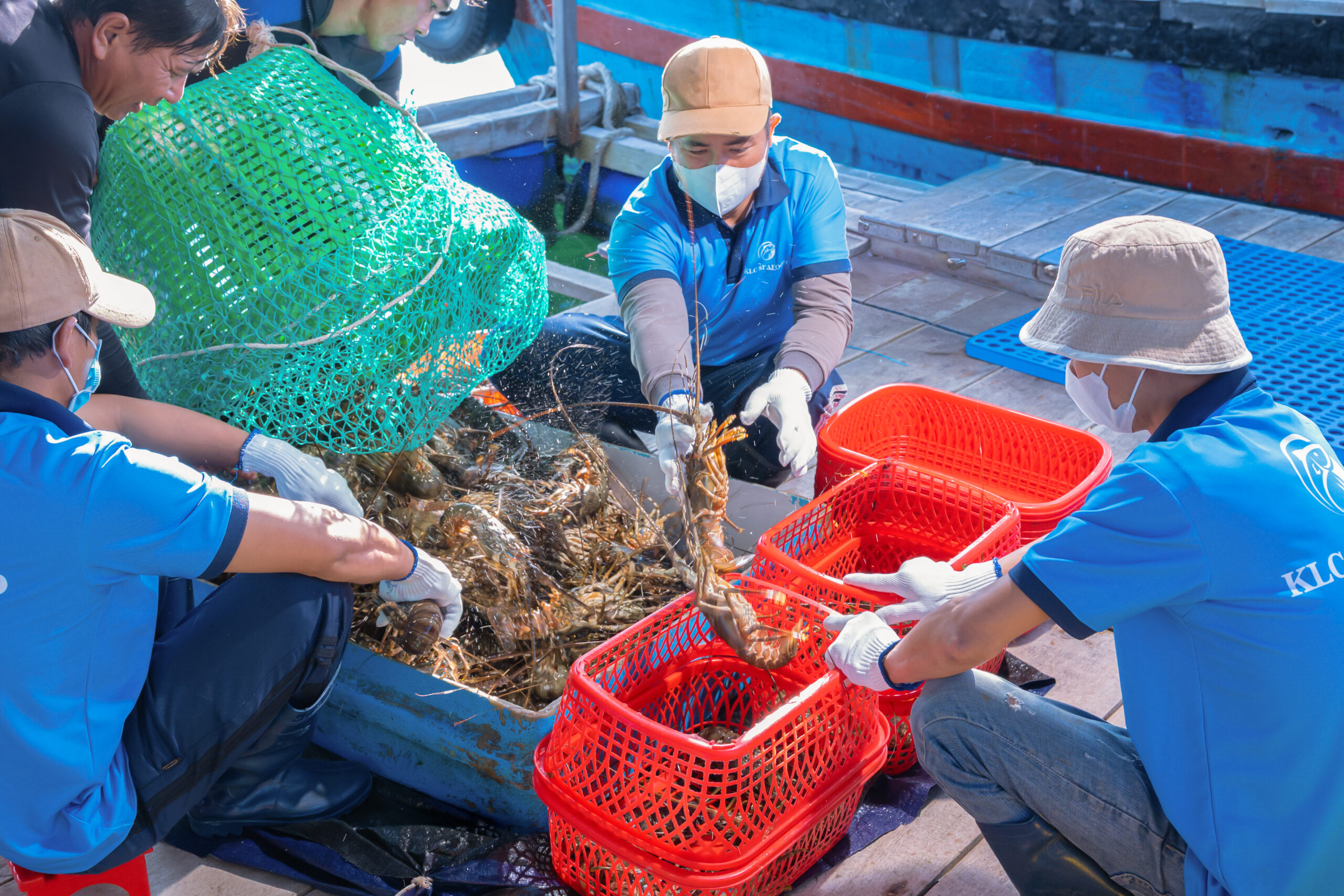
Incoming Quality Control at KLC Seafood
For exported live seafood, quality is not determined only at the packaging stage. It must be controlled from the moment products enter the supply system.
At KLC Seafood, lobsters are selected according to physical condition, size and appearance. Ornate spiny lobsters are assessed primarily for overall integrity, shell brightness and appropriate size, while scalloped spiny lobsters are graded according to physical condition, size and batch consistency.
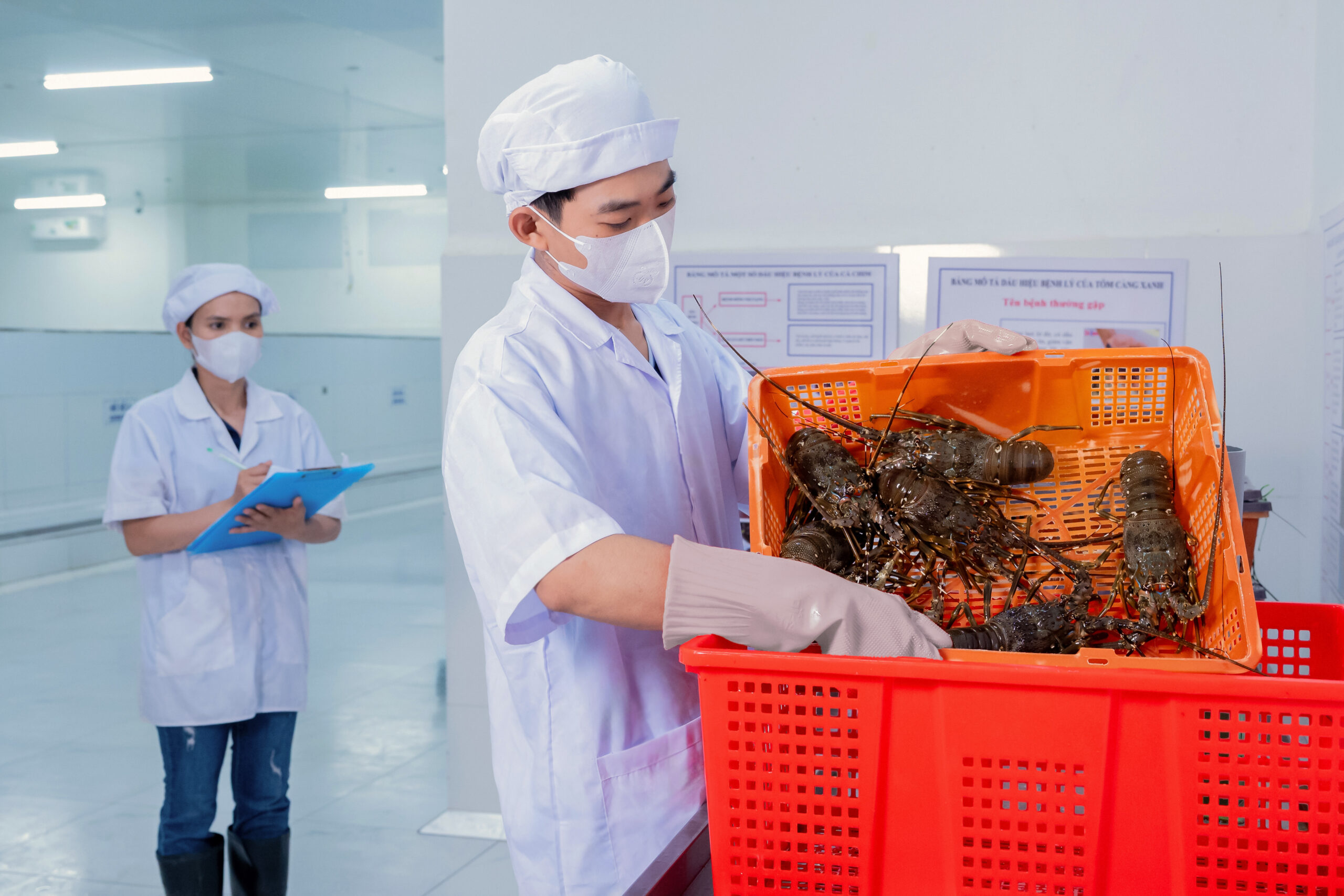
After receiving, the products undergo further inspection and grading according to each order’s specifications. Screening against specific criteria allows KLC Seafood to prepare supplies that more closely match customer requirements and the standards of each importing market.
This process is integrated with live holding, inspection, packaging and transportation, helping maintain product condition throughout the supply journey.
884 Hectares of Partner Farming Areas: The Foundation of KLC Seafood’s Supply Capabilities
KLC Seafood’s live lobster supply capabilities are supported by a network of 884 hectares of partner farming areas across Cam Ranh, Van Ninh and Song Cau.
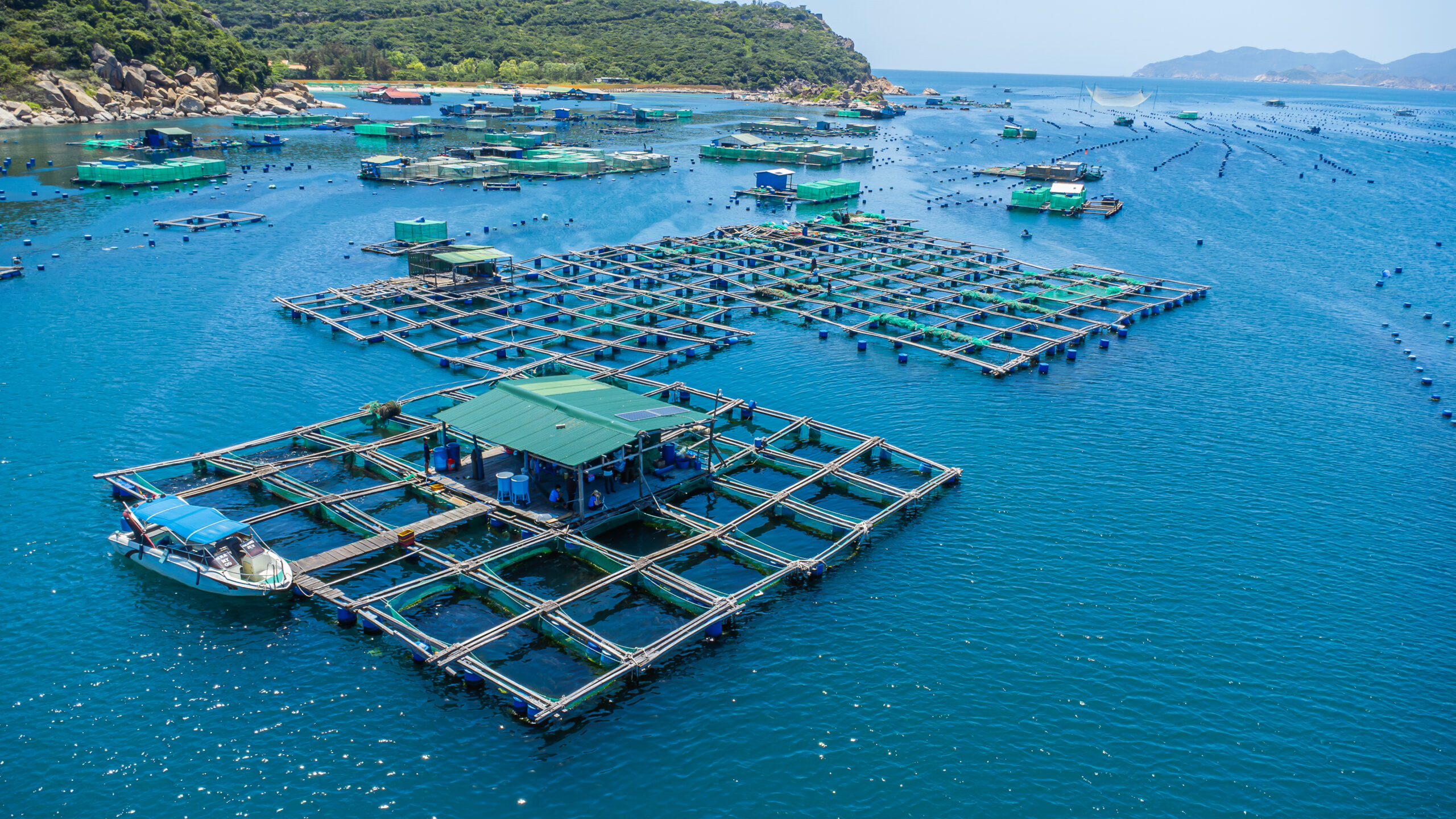
This network also includes the Cam Ranh – Cam Bình Aquaculture Services Cooperative and the KLC – Cam Ranh Lobster Farming Cooperative.
Collaboration among KLC Seafood, its farming areas and partner organisations strengthens supply autonomy, quality control and product traceability. It also enables the company to fulfil orders with varying volumes, specifications and delivery schedules.
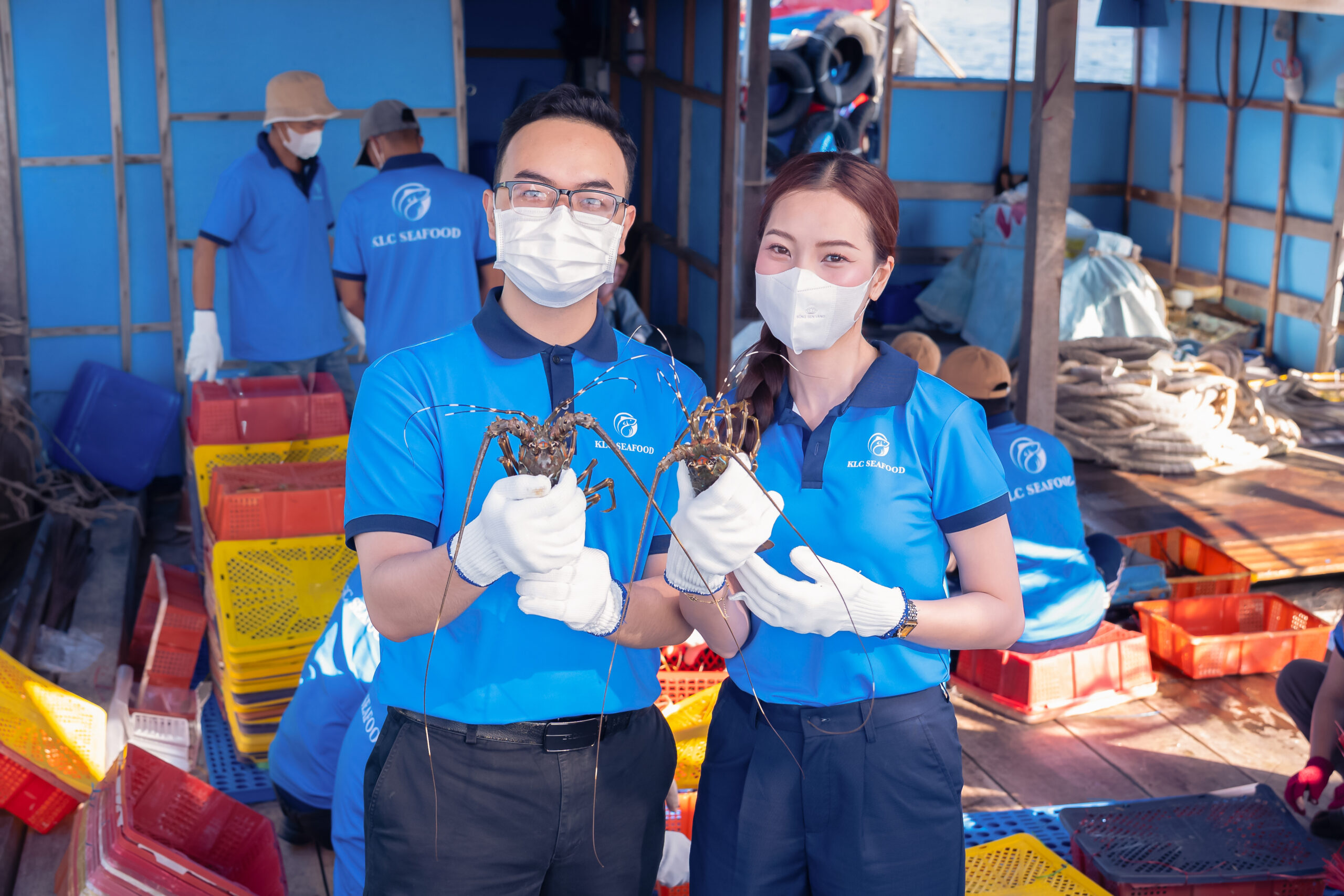
Specialised Live Seafood Holding System
In addition to its network of partner farming areas, KLC Seafood has developed a specialised live seafood holding system to support product receiving, grading and supply coordination.
Water conditions and technical parameters are monitored according to the specific requirements of each product. Once received, lobsters are graded by physical condition and specifications before proceeding to inspection, sampling and packaging in accordance with order requirements.
The holding system connects raw material supply with the export process. Shorter waiting times, proactive supply planning and close coordination among operating stages enable KLC Seafood to meet delivery schedules more effectively.
End-to-End Supply Chain Control
From partner farming areas through to packaging, supplies are managed through six principal stages:
- Receiving live lobsters from farming areas;
- Inspecting product condition and appearance;
- Grading by size and order specifications;
- Conducting inspections, quality control and market-specific sampling;
- Preparing and packaging products according to the mode of transport;
- Coordinating transportation by road or air.

Within the supply chain, Phat Loi is responsible for procurement, receiving and preliminary processing, while Gia Thịnh Phát manages processing and product standardisation under the HACCP quality management system.
Coordination among these member companies connects raw material supply, live holding, preliminary processing, packaging and logistics. This enhances quality control, traceability and the ability to meet order deadlines.
Supply Capabilities Demonstrated Through Export Performance
In addition to expanding its product portfolio, KLC Seafood has progressively demonstrated its ability to organise and operate an integrated supply chain across export markets.
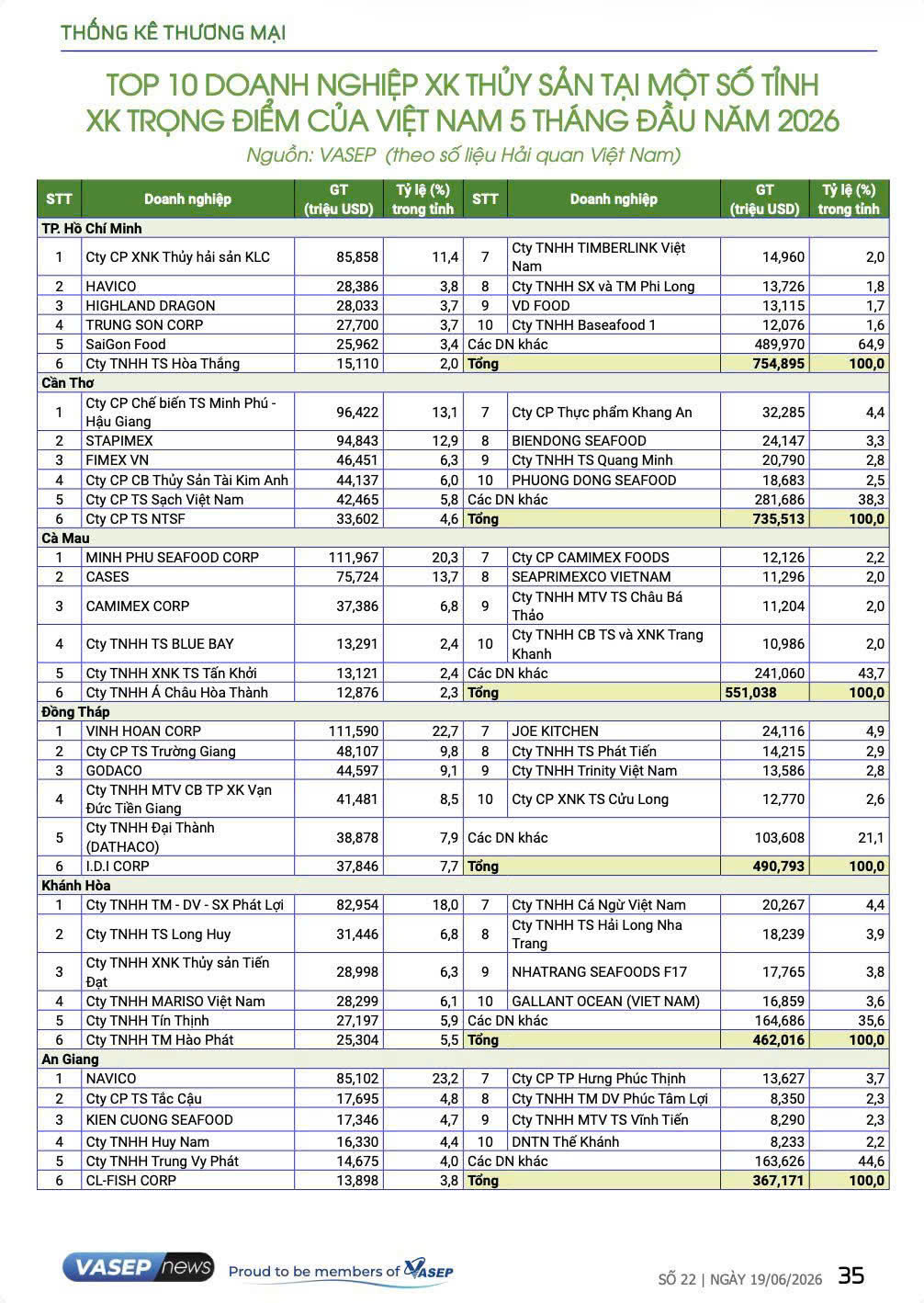
According to VASEP statistics based on Vietnam Customs data for the first five months of 2026, KLC Seafood and Phát Lợi ranked first in seafood exports in Ho Chi Minh City and Khánh Hòa Province, respectively. Their export values reached USD 85.858 million and USD 82.954 million.
These results demonstrate the operational capabilities of the KLC Seafood ecosystem while contributing to the growing value and position of Vietnamese seafood in international markets.
The company’s integrated supply chain capabilities were also recognised with First Prize at the 2026 Vietnam Fisheries Gold Quality Awards – VinaFIS Award, in the Integrated Supply Chain category.
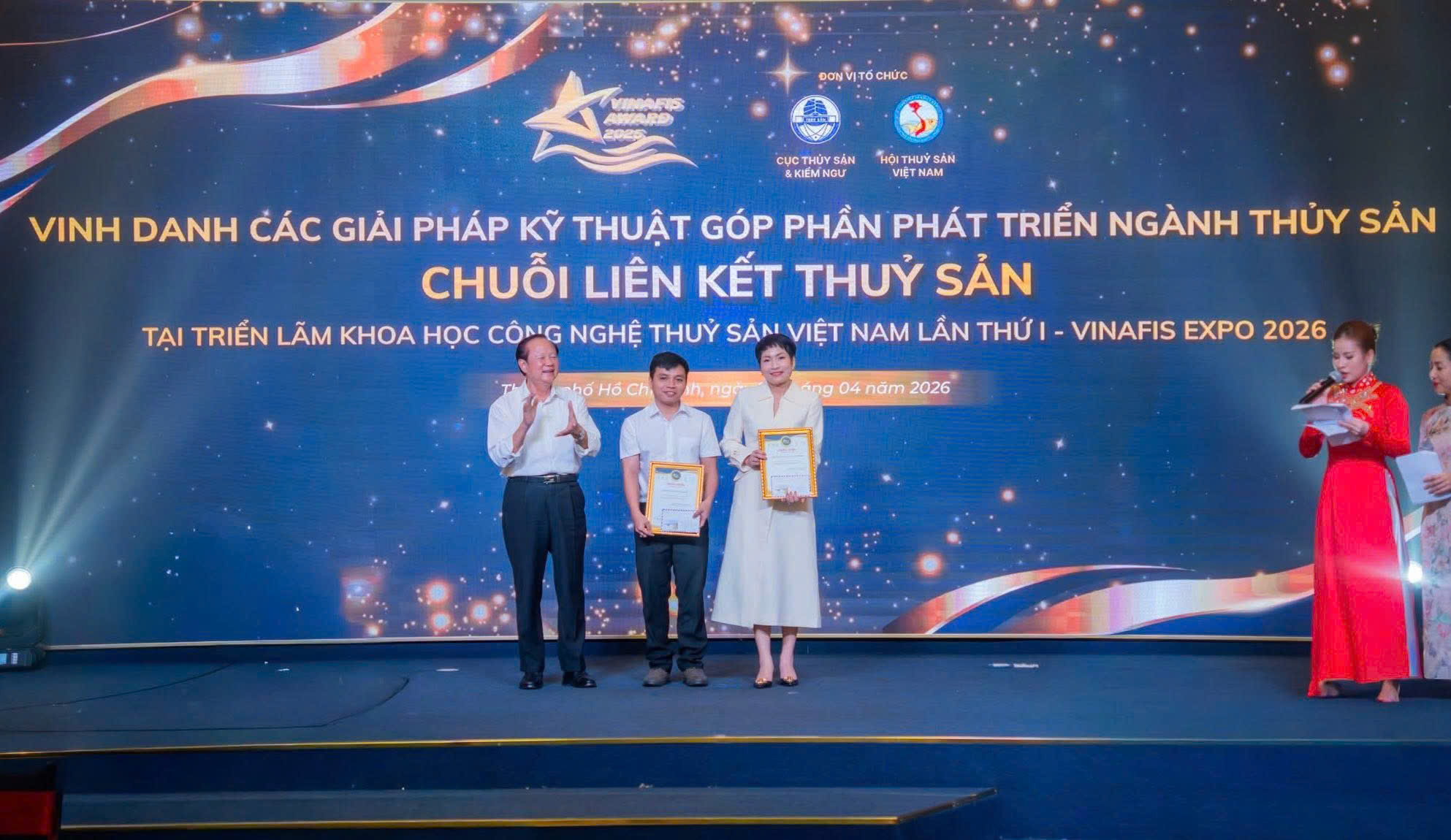
Award, in the Integrated Supply Chain category (Photo: KLC Media).
Supported by its farming network, live holding system, quality control procedures and order coordination capabilities, KLC Seafood continues to develop a more proactive and integrated live seafood supply operation aligned with international market requirements.
Q&A: Frequently Asked Questions About Ornate and Scalloped Spiny Lobsters
What is the difference between ornate and scalloped spiny lobsters?
Ornate spiny lobsters are generally larger, have a more striking appearance and are positioned in the premium segment. Scalloped spiny lobsters have a more compact body, offer greater flexibility in product specifications and serve broader market demand.
Which type of lobster is larger?
Ornate spiny lobsters are generally larger than scalloped spiny lobsters. However, actual product weight depends on the farming period, farming conditions and specifications of each batch.
Which lobster product currently has stronger export demand?
According to VASEP, scalloped spiny lobster is currently the primary growth driver of Vietnam’s lobster exports. Its key advantages are flexible specifications and the ability to serve multiple market segments.
Ornate and scalloped spiny lobsters are two core live seafood products in KLC Seafood’s portfolio. Ornate spiny lobster is positioned in the premium segment due to its size and distinctive appearance, while scalloped spiny lobster offers flexible specifications and broad market demand.
The complementary strengths of these products, together with 884 hectares of partner farming areas, a specialised live seafood holding system and end-to-end quality control, enable KLC Seafood to organise supplies more proactively and meet the specific requirements of each market.
For further information about KLC Seafood products, please contact our official Facebook page or call our hotline at +84 981 646 846 for prompt consultation and assistance.